Anjanaharibe-Sud Special Reserve
Français  |  Introduction  |  Biodiversity  |  Threats  |  Visiting  |  Contacts  |  Maps & Photos  |  Links
Anjanaharibe Site Search

powered by FreeFind

Camping at the Marolakana River crossing
photo: Bruno Lee Sio Tsion


Visiting / Hiking

For further information on how we can help you organize your trip to the area, please see our travel website: travel.marojejy.com.


Anjanaharibe-Sud offers an outstanding wilderness and cultural experience for those in search of rugged adventure. The reserve is open year-round. Although it can be rainy at any time of the year, the driest months are generally October and November, and April and May. Entry tickets and guides are required for vehicular travel and for hiking off of the main road through the park (i.e., on the Takhtajania, Ranomafana, and Summit trails). Entry tickets are available at the park headquarters (ANGAP) office in Andapa. Official guides can be obtained in either Andapa or the village of Befingotra; porters can be hired in the villages of Andasibe or Befingotra.

At present, no facilities are provided anywhere in the reserve, and visitors should come equipped for primitive camping. A small rain shelter and pit toilets have been proposed for construction at the Marolakana River crossing in 2006, but this is far from certain. Camping equipment (tents, etc.) may be available for rent in Andapa; please enquire.

Several “hotely” in Befingotra and Anjiamazava offer good, basic Malagasy food and beds in very simple, traditional, shared rooms. A variety of accommodation, ranging from basic to comfortable, is available in the town of Andapa.

Hiking in Anjanaharibe-Sud

Hiking in the reserve ranges from relatively easy to very strenuous, and includes several trails.

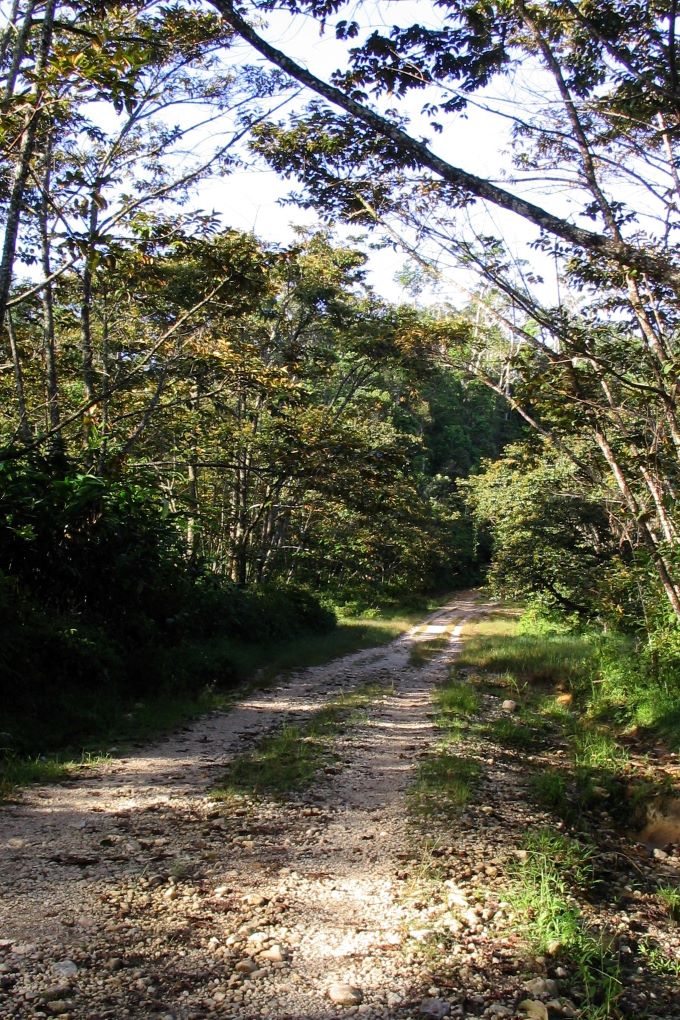
Hiking road in Anjanaharibe-Sud
photo: Paul Atkinson


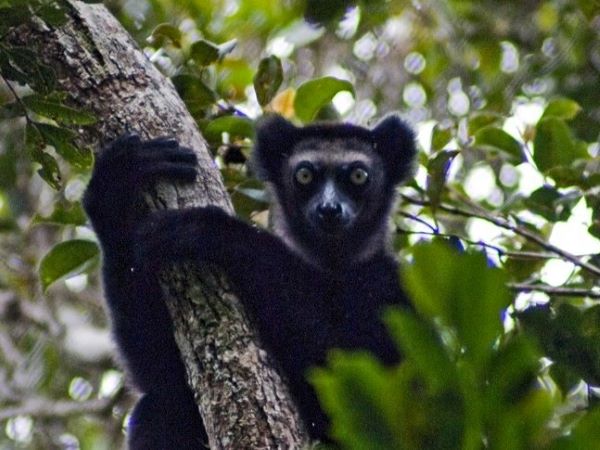
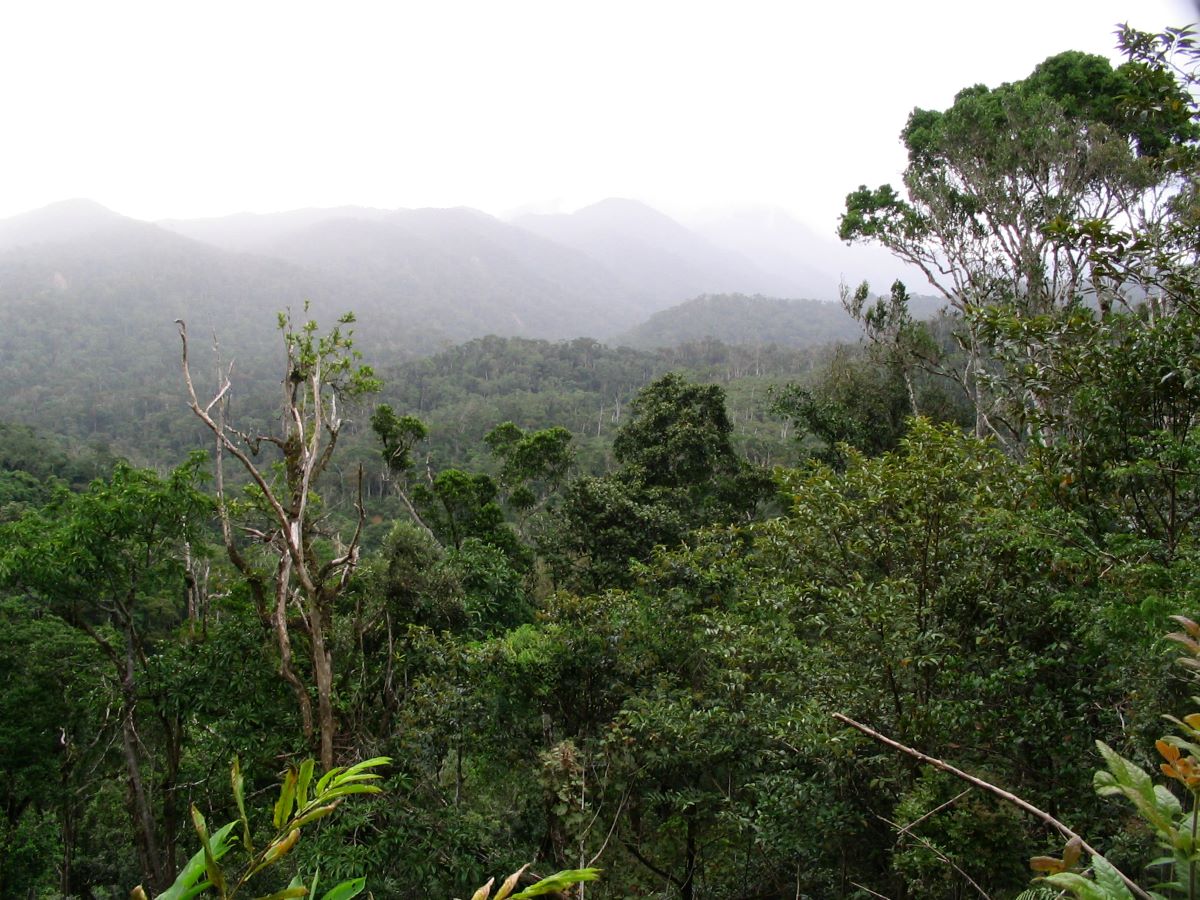
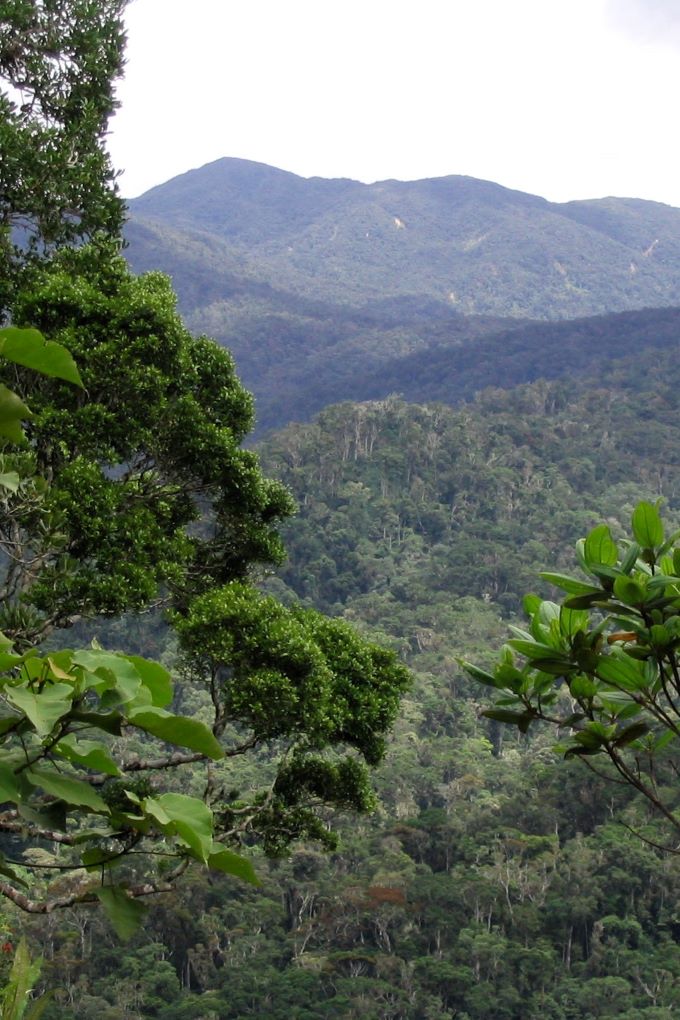
A rough, unmaintained dirt road provides a pleasant hiking or biking route through the reserve (sometimes passable to the Marolakana River with high-clearance four-wheel-drive vehicle). This road provides beautiful open vistas out over the rainforest-covered mountains. Many birds and lemurs can be seen from along the road, and the eerily beautiful calls of the indris are commonly heard. The road is wider and more open than the other trails, and consequently it has few leeches. Local people use this road as a footpath between villages on the east and west sides of the reserve — colorful women carrying large bags of rice or peanuts on their heads, men herding zebu or pigs to market, children going to school (sometimes several days' walk from their homes)…

The Ranomafana Trail leads 4.3 km from the road near Mandritsarahely Creek to several small hot springs, one of which is a sacred site used to worship the ancestors. The trail meanders through dense rainforest, then passes a short distance outside the reserve through the tiny village of Andranomafana before crossing the Marolakana River to the hot springs. White-fronted brown lemurs (komba) are commonly seen along this trail, with the possibility of spotting indris (babakoto) and silky sifaka (simpona) as well. Although not long, this is a fairly strenuous trail due to its primitive state, a difficult river traverse, and the abundance of leeches.

The Takhtajania Trail climbs a ridgeline to a site where the very ancient and rare species of tree called the takhtajania grows. In addition to seeing the takhtajania, it is also possible to see indris and silky sifaka, as well as red-bellied lemurs. This moderately difficult trail passes through open forest, often abloom with flowers, and affords many beautiful vistas overlooking the seemingly endless waves of rainforest-covered mountains.

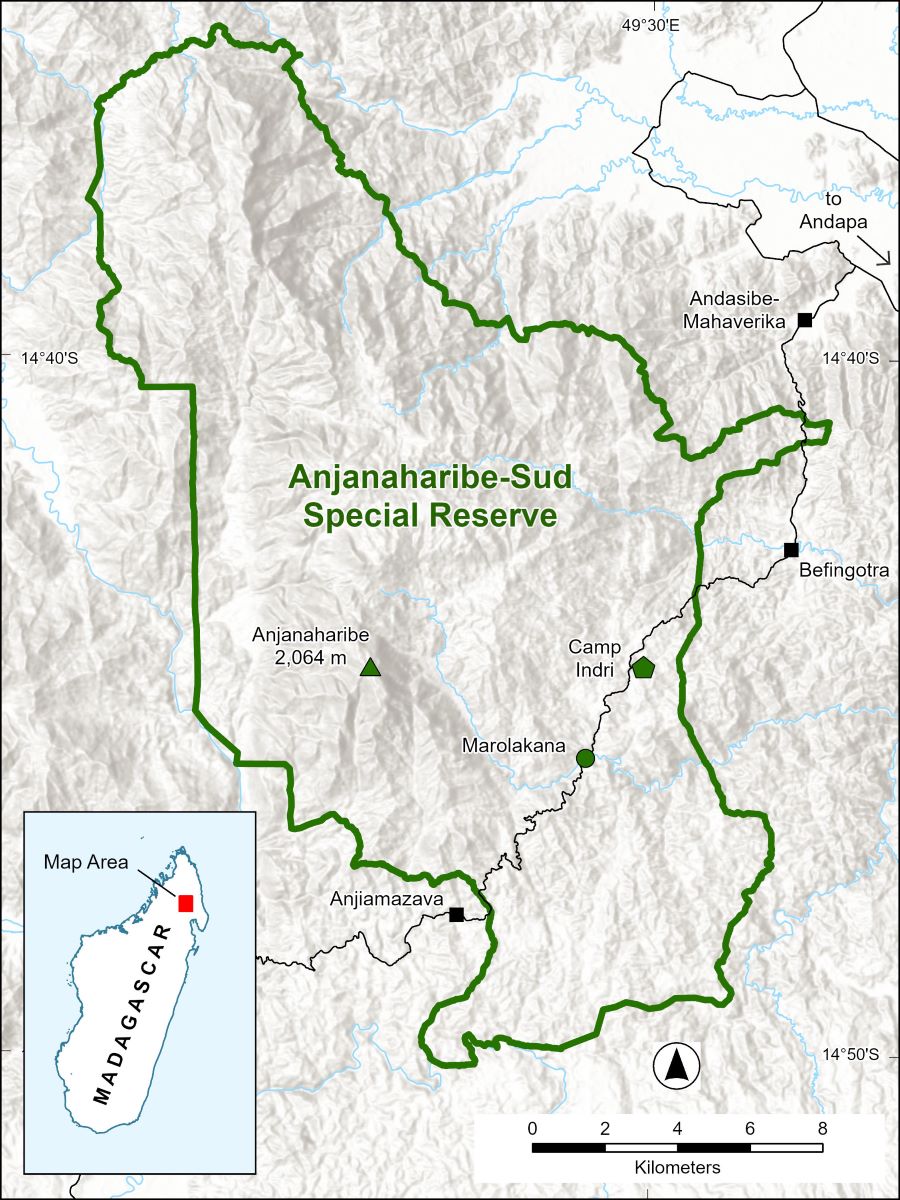
The Summit Trail continues from the takhtajania site to the peak of Anjanaharibe-Anivo — at 2064 m (6772 feet), the highest point in the reserve. This multi-day, very strenuous hike climbs through the mid-elevation rainforest to the high cloud forests, where perpetual mists keep the trees draped in lichens and mosses. [Trail currently impassible due to cyclone damage.]

The village of Befingotra
photo: Paul Atkinson


Access

The road into the reserve starts in the village of Andasibe-Mahaverika, 20 km from Andapa by rutted dirt road. Several taxis travel between Andapa and Andasibe (or Ambodipont) daily. From Andasibe, a 2–3 hour walk leads through forest and fields to the village of Befingotra; after walking another three hours or so one reaches a fine camping area on the banks of the Marolakana River. In dry weather, it may be possible to make the journey directly from Andapa to Marolakana in a four-wheel drive vehicle with high clearance. (The road is not maintained, is muddy, and has sections with very deep ruts. There are several steep sections, as well, with grades up to 20%. The road is virtually impassible for all vehicles to the east of the Marolakana River.)

What to Bring

This is the rainforest, so be prepared for rain, no matter what the season. Bring good raingear, and pack everything in waterproof bags. Sturdy sandals are sufficient if walking only on the main road through the reserve, but good boots are essential when hiking on trails through the forests. Lightweight clothes are best for daytime travel, but evenings can be cool and an extra, warmer layer may be needed. As there is no accommodation within the reserve, you must bring your own tent and sleeping bag. Food should be purchased in Andapa. Good water is found in streams throughout the reserve so there is no need to carry bottled water; however, filtration and/or purification tablets are always recommended. Mosquito repellent will keep the mosquitoes at bay, and long pants tucked in socks will help to repel leeches. There are no dangerous animals (other than rare scorpions) in Anjanaharibe-Sud.

The Andapa Basin, Antanetiambo, and Marojejy

Often called the “rice basket” of northeastern Madagascar, the vast, flat Andapa Basin is an emerald-green expanse of rice fields. It is surrounded on all sides by the high mountains of Marojejy, Betaolana, and Anjanaharibe-Sud, and is dotted throughout by small, picturesque villages. The town of Andapa makes a good base for exploring the basin by foot or by bicycle, and the small private reserve of Antanetiambo, owned and managed by local environmentalist Mr. Rabary Desiré, offers an excellent introduction to the very unique natural and cultural histories of the area. The magnificent Marojejy National Park lies just to the northeast of the Andapa Basin and can be accessed from the village of Manantenina, 40 km from Andapa along the road to Sambava.

Slideshow


 BACK TO TOP